Apex technical guide
Can you paint over intumescent coating?
Can intumescent-coated steel be repainted? Learn how approved topcoats, inspection, repairs and project records protect the specified fire-performance system.
Published by Apex Specialist Spray Coatings LTD · Updated 2026-10-22 · Our experience and preparation standards
Yes—but only when the complete system permits it
Intumescent-coated structural steel can sometimes receive a decorative or protective topcoat. The important word is “sometimes”. An intumescent coating is a fire-protection product, not simply a coloured paint layer, and any coating placed over it must be compatible with the named system and its tested or assessed use.
The correct decision depends on the installed intumescent product, primer, environment, required fire resistance, existing topcoat and condition of the steelwork. A general-purpose gloss, masonry paint or unverified industrial coating should not be added merely because it gives the required colour.
A topcoat and another intumescent coat are different decisions
A topcoat or sealer is the outer finish of an intumescent system. It may provide colour, cleanability or environmental protection where the manufacturer’s specification requires it. A new layer of intumescent material is intended to contribute to fire protection and is controlled by the project’s fire design and product assessment.
These two operations are not interchangeable. The Association for Specialist Fire Protection advises that applying more intumescent coating over a system that already has a topcoat is generally not advisable unless the manufacturer has relevant fire-test evidence. Removal of the existing topcoat may be required before an approved repair or upgrade, but that decision belongs in the system-specific repair method.
Identify the existing system before specifying paint
Start with records rather than colour. Look for the fire-protection specification, product name, manufacturer, primer and topcoat details, required fire-resistance period, steel schedule, dry-film-thickness records and previous repair information. Labels, handover files, inspection reports and original contractor records can all help.
If the installed product cannot be identified, compatibility and the permitted maintenance route cannot be responsibly assumed from appearance alone. A site inspection can record the visible condition, but the manufacturer or project fire-protection specialist may still need samples, records or further investigation before a repainting method is accepted.
- What intumescent product and primer were installed?
- Is a topcoat already present, and if so, which one?
- What environment was the system specified for?
- Are the original loading schedule and inspection records available?
- Has the steelwork been altered, damaged or exposed to moisture?
Approved topcoats are product-specific
Manufacturer documents show why a generic rule is unsafe. Sherwin-Williams lists particular approved topcoats for its FIRETEX FX1003 and FX2003 systems, with the selection changing according to the environmental category. Its FIRETEX FX6010 application manual likewise states that any topcoat—including a later finish coat—must be approved for use with FX6010.
The FIRETEX FX6010 Declaration of Performance names a defined set of compatible topcoats. That list is evidence for that product and assessment; it is not permission to use those finishes over every intumescent coating. The current data sheet, project specification and manufacturer advice should control the actual choice.
Inspect condition before cleaning or recoating
The survey should separate a cosmetic colour request from defects in the fire-protection system. Check for impact damage, cracking, blistering, flaking, exposed primer or steel, corrosion, water staining, contamination and areas altered by later building work. Connections, edges, bolts and restricted faces deserve particular attention because continuity matters.
Do not hide damage beneath a decorative coat. Where the intumescent layer or substrate has failed, the affected area needs an approved repair procedure. The FIRETEX FX6010 manual, for example, says repairs should be made promptly to limit further damage and moisture ingress and directs applicators back to the product guidance where steel has been exposed.
Preparation must preserve the fire-protection layer
Preparation is governed by the condition and the approved overcoating method. It may involve controlled removal of contamination and loose material, local treatment of damaged areas and confirmation that the surface is clean, dry and ready for the specified finish. Aggressive abrasion or unplanned stripping can reduce the existing intumescent film and should not be used as a routine keying method.
Recoat windows, surface cleanliness, moisture, temperature, ventilation and curing requirements are product-specific. A compatible product can still fail if applied over contamination, an uncured repair or unsuitable conditions. Masking and overspray control must also protect adjacent finishes, services and occupied areas.
Film thickness and records still matter
The fire-protection loading is not chosen by counting coats. It is derived from the specified system, fire-resistance requirement and the size and exposure of each steel member. Steel Construction explains that the required protection thickness depends on the product, fire period and section factor.
Dry-film-thickness readings and the project loading schedule are therefore central to new work and repairs. A decorative topcoat should not be used to conceal missing records or compensate for inadequate intumescent thickness. Record the products, batch details where required, repair locations, environmental readings, wet- and dry-film checks, and the completed finish so later maintenance teams know what is present.
A genuine Apex intumescent project
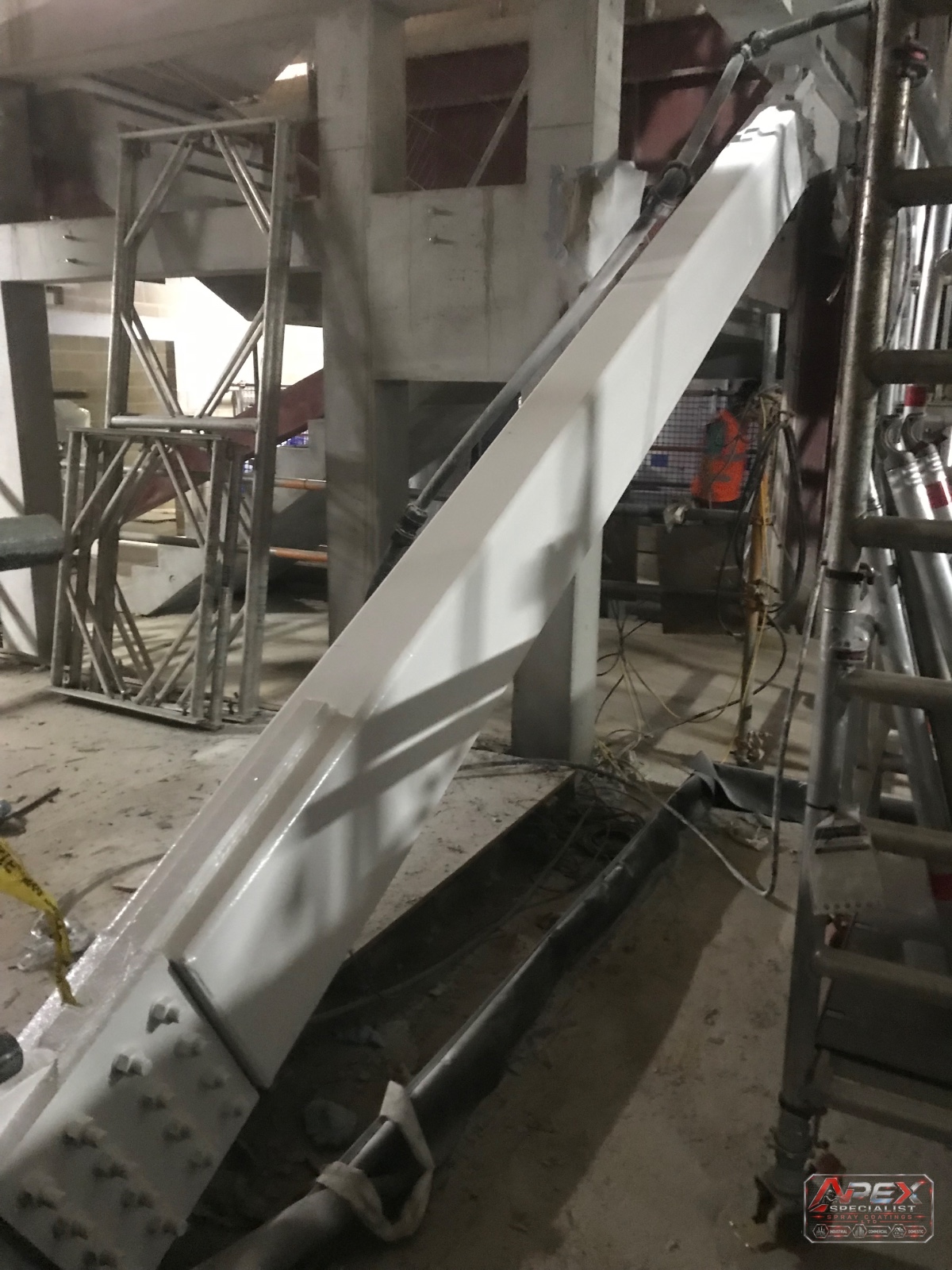
At Timber Square in Bankside, London, Apex applied Sherwin-Williams FIRETEX FX1003 and FX6010 to selected structural steel. The saved project record covers beams, columns, braces and connections, with the specified loading varying between members; some selected sections required more than 4 mm dry-film thickness for the project’s specified 90-minute fire resistance.
That project demonstrates controlled intumescent application and film-build inspection. It does not establish that an additional decorative topcoat was applied, because no such topcoat is recorded in the saved project information. Any future repainting of that or another intumescent system would need to follow the relevant specification and current manufacturer guidance.
What to include in a quotation
A useful quotation should define whether the request is a colour change, maintenance, local repair or a fire-protection upgrade. It should identify the known existing system, areas included, access, protection of occupied spaces, preparation, repair materials, approved finish, inspection responsibilities and the records to be handed over.
Ask who will confirm product compatibility and who is responsible for the fire-protection specification. Also clarify whether independent inspection is required. A workmanship guarantee relates to the contractor’s application; it is not the same as a product warranty, fire assessment or assurance that an unidentified existing system remains compliant.
- Named primer, intumescent and approved topcoat system
- Required fire period and steel loading schedule
- Condition survey and treatment of damaged areas
- Access, masking, ventilation and programme constraints
- Inspection, dry-film-thickness checks and handover records
- Maintenance requirements and any manufacturer-specific warranty terms
Further reading and technical sources
The existing Apex overview explains the role of the specification, preparation and inspection: https://apexspecialistspraycoatingsltd.co.uk/guides/intumescent-coatings-for-structural-steel
Association for Specialist Fire Protection, Ask the Expert: https://asfp.org.uk/knowledge/ask-the-expert
Sherwin-Williams, FIRETEX FX1003/FX2003 product information: https://industrial.sherwin-williams.com/content/dam/pcg/sherwin-williams/protective-marine/emeai/de/de-de/pdfs/product-information/FIRETEX-FX1003-FX2003-Product-Information-Sherwin-Williams-English.pdf
Sherwin-Williams, FIRETEX FX6010 application manual and Declaration of Performance: https://industrial.sherwin-williams.com/content/dam/pcg/sherwin-williams/protective-marine/na/us/en-us/pdfs/marketing-uploads/FIRETEX-FX6010-Application-Manual-SW.pdf and https://industrial.sherwin-williams.com/content/dam/pcg/sherwin-williams/protective-marine/emeai/de/de-de/pdfs/certifications/declaration-of-performance/firetex-fx6010-dop-sw-fx6010-sw-gb.pdf
Steel Construction, Multi-storey steel buildings: Fire engineering: https://steelconstruction.info/upload/Wiki-Files/c/c1/SBE_MS6.pdf
These sources were checked on 22 October 2026. Product approvals and technical documents can change, so the current manufacturer specification should be confirmed for each project.
Discuss your structural steelwork with Apex
For intumescent coating, inspection-led maintenance or structural steel spraying in York, across Yorkshire or nationwide, send Apex the site location, photographs, steel schedule and any existing fire-protection records. The team can then establish what is known, what needs checking and whether a manufacturer-approved coating route can be specified.
Email apexspecialistspraycoatings@outlook.com or call 07904 815512. Final product selection, fire-resistance loading and any repair method remain project-specific and must be confirmed from the applicable design and manufacturer documentation.