Apex technical guide
Should commercial cladding be sprayed or replaced?
How to decide whether serviceable commercial cladding can be refurbished with a coating system or needs repair or replacement.
Published by Apex Specialist Spray Coatings LTD · Updated 2026-10-16 · Our experience and preparation standards
Refurbishment is suitable when the cladding remains serviceable
Faded colour, chalking, local coating failure and isolated corrosion do not automatically mean all panels need replacing. Where the sheets remain structurally serviceable, a properly specified refurbishment can restore appearance and protect prepared surfaces with less disruption than wholesale replacement.
When repair or replacement may be necessary
Coating cannot correct serious structural damage, widespread perforation, failed panel joints, water-entry defects or unsuitable underlying repairs. Damaged sheets, fixings, flashings or seals may need to be repaired or replaced before any wider coating programme begins.
- Check panels for distortion, holes and advanced corrosion
- Investigate water entry rather than covering the symptom
- Assess fixings, laps, cut edges, gutters and flashings
- Confirm whether the existing coating is sound enough to prepare and recoat
Compare the complete scope
The comparison should include access, removal and disposal, replacement materials, interruption to the site, repairs, cleaning, preparation, primers, finish coats and future maintenance. Comparing only the headline material cost does not show the true difference between refurbishment and replacement.
A survey supports the right decision
Photographs are useful for an initial conversation, but close inspection may be needed to confirm adhesion, corrosion and hidden defects. Apex will only recommend coating where the surfaces can be prepared to receive a suitable system; areas that require repair or replacement should be identified rather than concealed.
An Apex refurbishment example in Leeds
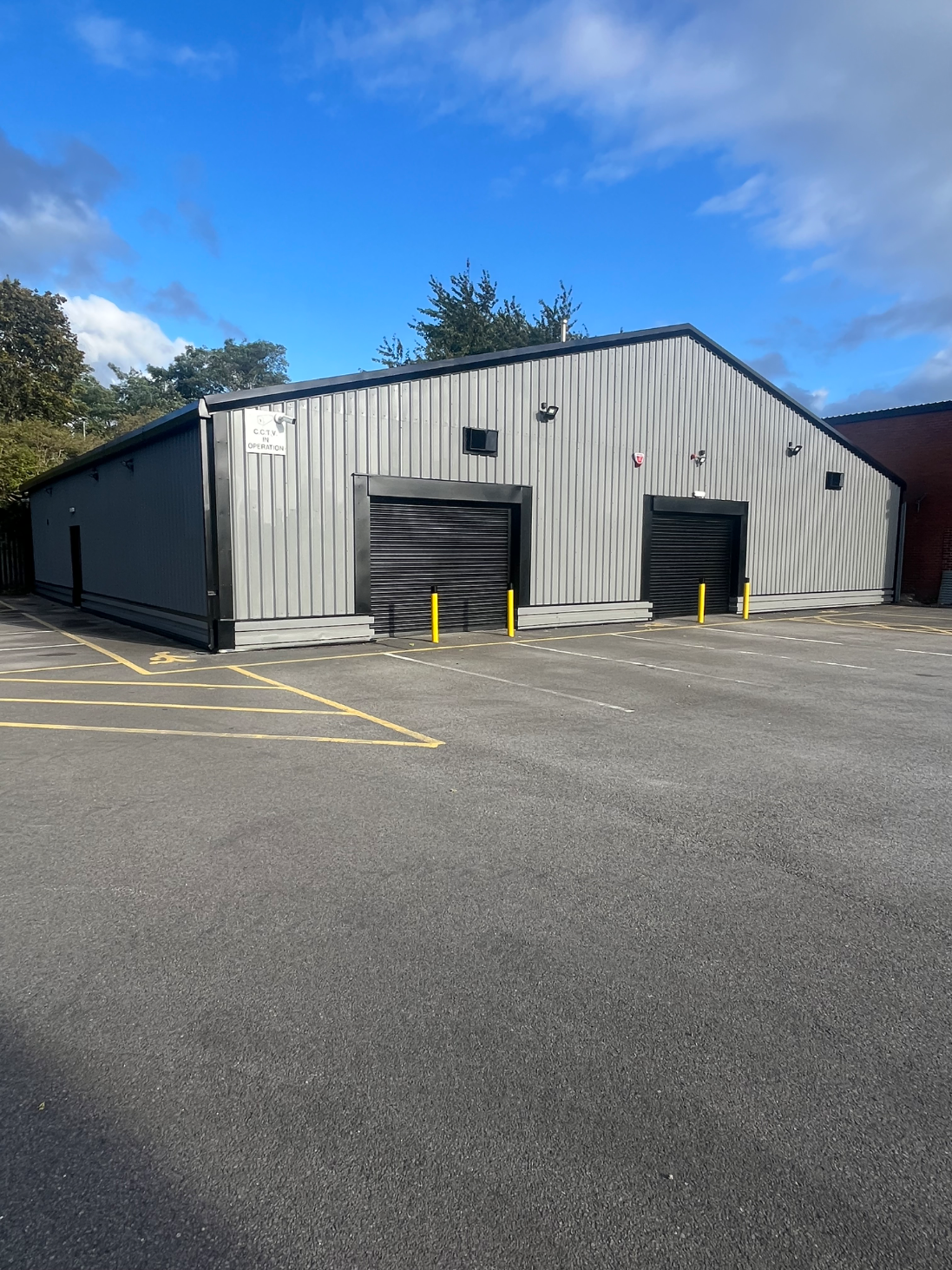
At the former Travis Perkins site, Apex refurbished two industrial buildings and coordinated the cladding with doors, shutters, architectural details, fencing and internal surfaces. The preparation included cleaning, removing failed paint, filling former signage holes, feathering coating edges and treating corrosion before priming and finishing.
The project demonstrates how a refurbishment scope can address several surfaces together. It does not establish a universal saving against replacement; that comparison requires an assessment and like-for-like quotations for the actual building.